Go to lunch. Come back to merged PRs.
A self-hosted software factory for coding agents. Point it at an existing repo or describe a brand-new project — the council plans, a writer implements in isolated git worktrees, and your own gates decide what merges. On demand or on a nightly cron. You stay out of the loop.
One factory. Every major coding agent.
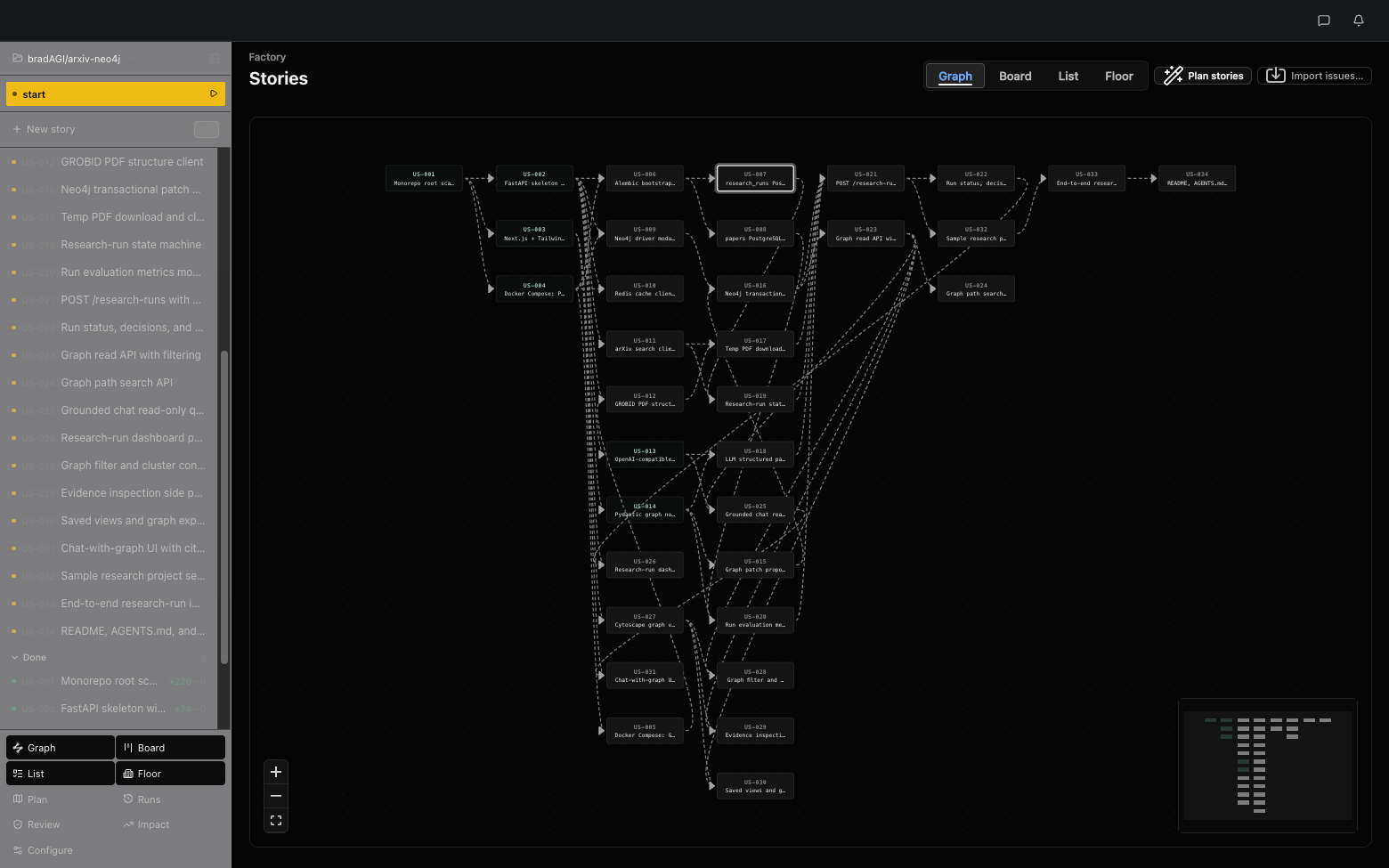
How it works: a council of agents
Advisors plan in parallel, a judge synthesizes one plan, a single writer implements it in an isolated worktree, and your gates decide what merges.
Describe or scan, then the council plans
Say what you want built in plain language, or point BreadCode at a repo and it scans dependencies and conventions to suggest the work. Then advisors plan it in parallel and a judge synthesizes one plan.
Describe or scan
Describe the work in plain language, or point BreadCode at a repo — it scans dependencies and conventions and suggests the work.
The council plans
Advisors run in parallel and each propose a plan; a judge synthesizes them into one. (Or race mode: several agents each write a full implementation.)
A writer implements. Your gates decide.
A single writer turns the plan into code in an isolated git worktree. Your gates certify the result, and a verify-green change auto-merges — unattended. If a merge later breaks main, post-merge verify reverts it automatically. You were at lunch.
See the featuresAdd rate limiting to the API — verify with tests
A writer implements — isolated
A single writer turns the plan into code in its own git worktree. No collisions with your working tree.
Gates certify → it merges
Lint, typecheck, test, and build run on the result. A verify-green change auto-merges and the loop continues — with a post-merge verify on main that auto-reverts a bad merge. Or watch every lane live and approve merges yourself.
Stop babysitting one agent. Run a whole council.
BreadCode drives every major coding CLI through your own accounts — 18 harness integrations, 10 council modes — and only merges what passes your gates.
Every agent in one loop
From Claude to Codex to Cursor — BreadCode orchestrates the tools you already use, plans in parallel (or races full implementations when you want), and merges what passes your gates. Import GitHub issues as stories, schedule nightly cron runs, and track merge rate and cost on the Impact page.
Orchestrates your whole toolkit
One job, many agents. BreadCode drives each agent through its own CLI and your own accounts, then merges the best result.
Runs where you already code
BreadCode runs locally on macOS, working in git worktrees on your own disk — no code leaves your machine.
Nothing merges unless your checks pass.
Every attempt — from any agent, in any council mode — runs your project's own gates before it can land. Green work merges (or opens a PR, per your policy). Red work never touches your branch.
Gates are auto-detected from your repo (package.json, pyproject, mise, just, Go/Rust conventions) and overridable per project. No runnable checks? BreadCode stops and says so — it never pretends to verify.
Early benchmark results & methodologyOne plan. The whole factory.
Everything BreadCode does, on your machine — running the council on the agents and subscriptions you already pay for. No tiers, no seats to count.
Simple monthly pricing. Cancel anytime.
Bring your own agent accounts — BreadCode orchestrates the coding-agent CLIs you already use, under your own provider plans.
BreadCodePopular
The whole autonomous factory, on your own infra.
Everything, one price:
- The full macOS app — local and self-hosted
- 18 agent harnesses (Claude, Codex, Cursor, Grok, Gemini, Copilot…) — bring your own keys
- 10 council modes — advise, race, consensus, pipeline, and more
- Parallel lanes in isolated git worktrees, sandboxed verify gates
- GitHub built in — import issues as stories, open PRs, read CI checks
- Nightly cron schedules + automatic revert on post-merge failure
- Unlimited projects, run history, and Impact analytics
- Your code never leaves your machine
Frequently Asked Questions
Everything you need to know about running the council. If your question isn't here, reach out any time.
Ship your backlog while you sleep.
Self-hosted. Bring your own agents. Existing repo or a fresh idea. Your code stays on your machine.